Showing posts with label Italian. Show all posts

Saturday, April 26, 2025

The case of Paisley from a Medieval and Renaissance perspective

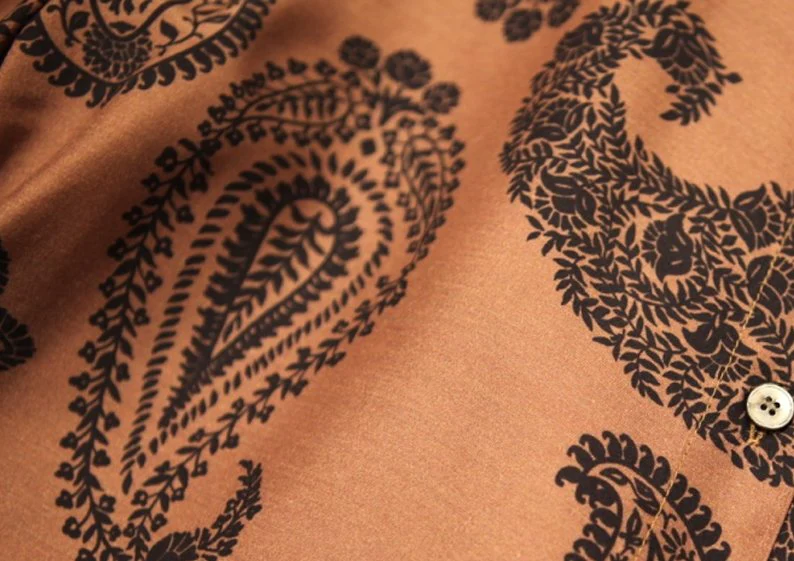
There is a lot of mythology around the paisley print. Some say it has ancient origins but came to the West in the 16th C. Others argue that it wasn't a thing in Europe until the 18th century. This is evident in multiple blog posts on the subject of paisleys.

Taken from Toast Magazine

I personally had been told the "no paisley in the medieval and Renaissance period" so many times, I figured it must be true.  Afterall, the closest thing I found for a while was this 17th century portrait which is just outside of the SCA period:

Taken from Tate
However, it looks like it's another "word" problem, similar to the word "pink".   Pink as a color existed in the SCA period but the word pink to *mean* the color did not.  The same seems to go for the word paisley.  

Paisley, in the SCA period, means the Scottish town which is just outside of Glasgow.  I've been to it and through it a few times.  It's a lovely manufacturing town which, as many sources suggest, is where the design paisley got it's name from when the weavers in the town Paisley started to turn out the design in the 18th century.   

Before that?  I'm not sure if there is an English name for it.  However, the design itself did exist in Europe well within the SCA period. Here is the evidence:

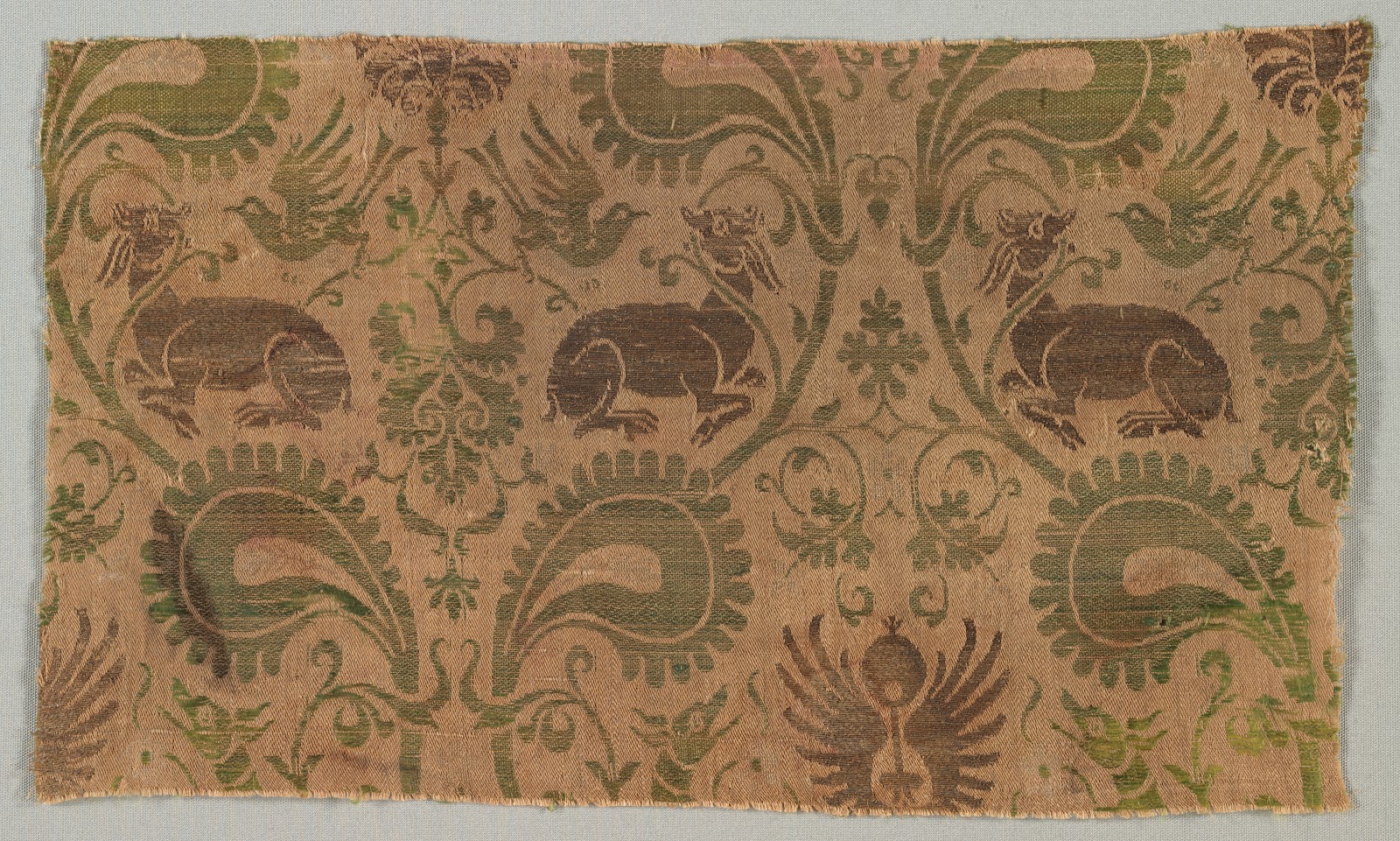
Taken from the Cleveland Museum

The above is a piece of silk lampas, manufactured in the second half of the 14th century...in Italy.  Those big green things below the heraldic dogs certainly look like paisleys to me!   To show it's not a one off, look above the back of the bird's head in this next 14th century piece.


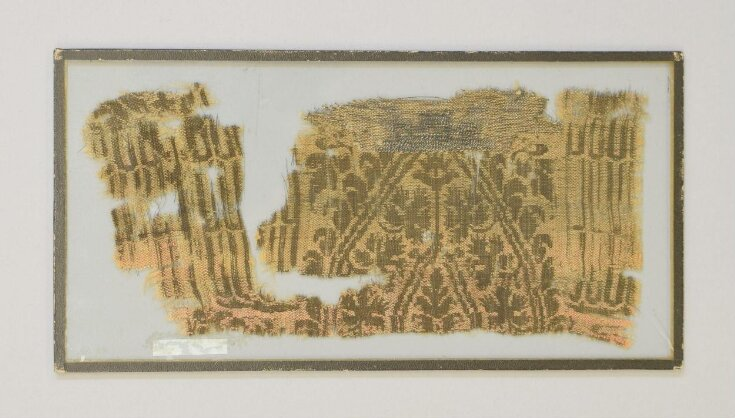
Taken from the V&A Museum

It's also a fun one since it was made in Iran - where we know they did have paisley designs in the 14th and 15th centuries- but used in 14th century Germany for a dalmatic.  This also seems to be the more popular form of the paisley design as it shows up, again, in 14th Century Italy.

Taken from the V&A Museum


The more modernly common paisley shows up again in Italy in the 16th century.

Taken from the MET

As well as in 16th century Spain!

Taken from the MET


And one last late 14th century one that is Italian made, but found in France.

Taken from the V&A


Really, it looks like the paisley was fairly popular in 14th C Europe, though it is a part of other designs.  Hopefully, this will be helpful for anyone else trying to document the paisley into the later medieval period and up into the Renaissance era.   Now, I can safely say that even the design elements on my sari turned 1490's gown are period correct.  :-)


Edit to add:  I wanted to add this image as well:

While the Turkish lady is from the 17th century, her hat clearly has paisleys.  This, again, pushes that whole "18th century" idea back.  Plus, the painting may be as early as the 1610's.  

Thursday, August 10, 2023

New sheer handsewn linen camica


The camica laid out on my bed at Pennsic.   It's too sheer to model as it's out of 2.5oz linen I bought from Fabric Store.   


Close up of the neckline.  I used linen thread I would run through beeswax to sew the entire camica.   Each of the edges are rolled or are wrapped in what is essentially linen bias tape.   


Close up of one of the cuffs.  I still need to add twill tape or some sort of fastener to the cuffs.  

Overall, it took me maybe three days, on and off, to sew the camica up while at Pennsic?  This included cutting out the garment and going to classes or walking around.   It really didn't take too terribly long.

The pattern is very simple.  One yard of linen for the front.  One yard of linen for the back.  30" of  the linen, cut in half for the sleeves (so the "top" of the yard is one sleeve and the "bottom" is the other).  5"ish to make squares.  I cut the bottom of the front and back to make binding for the neckline and cuffs.  Overall:  3 yards of fabric used.  

It's very lightweight and perfect for summer.   I'll probably wear it to the North Carolina Renaissance Festival in a few weeks.  :-) 

Saturday, May 6, 2023

Late 16th Century Venetian Style Peasant Dress


Materials

3 1/2 yards of red linen/cotton blend from Fabric Mart

1/2 yard of cotton duck cloth

1/2 yard of white cotton

1/2 yard of linen rayon blend stripes from Fabric Mart

DMC thread because no one carries red linen and I thought the event originally was a weekend ago

White linen thread from Thimble and Plume

A boot lace

3 ish yards of trim I bought from Lace & Trims on ebay

Pattern

I used McCalls M7763 for the bodice but with edits. I upped the neckline by at least a good inch. I took two inches off the front shoulder strap and redesigned them to be more narrow at the top. I took some off the upper inside of the front side seam as well.

The skirt is just pleated yardage that I then attached to the bodice. The apron is well, a rectangle with a long, thin strap of material to make the ties.

First Wearing

I didn't get the chemise I wanted to wear with the outfit done in time.  I ended up just wearing a blouse I found at Goodwill that looked close enough.   


The bodice probably could have been laced a bit tighter but, overall, it was pretty comfy to wear.  I love the length of it and will probably make a couple more dresses from the pattern.


It was also the correct outfit to wear as it was pretty warm in the sun at the event.  Unfortunately, I had to leave early because the pup wasn't used to the heat.  She's fine - she cooled down quickly on the car ride home- but I just didn't want her to get sick.   


Research


It was pretty much based on the same images as I used for my friend's dress a couple of years ago.  This one in particular:


Pietro Ronzelli: Nativita di Maria, Chiesa del Carmine, Bergamo


I just did the inverse colors - primarily because I didn't have a bright red Venetian dress.  Now that I do, I think I'll work on making more chemises to wear with my dresses and gowns.  I'll need them come Pennsic!   Who else is going?


Tuesday, July 28, 2020

Sari made into a 1490's Venetian dress


I made this back in May and forgot to post it.  Self-drafted out of a sari I found at a thrift store last year. Although the paisley pattern on the sari isn't accurate for the late 15th/early 16th c   (EDIT: Please see my latest research here on the paisley print actually being pretty accurate for the period) , the sari was too pretty to not be made into something.

The pallu of the sari ended up being the faux underskirt and the gauntlets. The bodice is made from the blouse piece and part of the hem of the original sari skirt. I cut up the sari skirt into five panels - three panels have a "flower" design on them and make up the overskirt fronts and the back of the dress. The plain (it has the hem treatment but not design on the body of it) parts of the skirt became the sides of the gown. The upper part of the skirt had a lovely trim detail that I cut off and made into the trim you see around the open front and around the faux front on the bodice.

It fits really well.  I can't wait for this COVID to be over and I can wear it to an event!

Monday, September 30, 2019

HSM2019Sep:Katina's Pretty New Green 16th Century Italian Dress


Having fun at the Castle

Back of the dress

The Challenge: September: Everyday: It’s not all special occasion frocks. Make something that would have been worn or used for everyday.

Material: Avocado green linen, orange linen, cotton canvas (inner lining), cotton muslin (lining).

Pattern: Very heavily modified McCalls 2806 which is out of print. I used the bodice pieces only and drafted the darts out. I also changed the neckline and the width to fit Katina better.

Year: 1570s/1580s

Painting by Federico Zuccaro dated to 1579

Attributed to Pietro Ronzelli, date unknown


Notions:  The shoelace to lace the bodice up, thread, and my old green apron

How historically accurate is it? I machine sewed the insides but all the trim and the eyelets were done by hand so about 90%?

Hours to complete: I'm honestly not sure.  I know I started on it in September but I can't recall how long this one took - maybe five or six hours total?

First worn: September 28th, 2019

Total cost:  The avocado linen was $10 a yard and I had three yards to play with.  The orange linen was $7.50 a yard and I also had 3 yards of that.  I'm not sure how much I paid for the cotton canvas originally - maybe $4 a yard?   I only used a half yard for the project.   The muslin was $4 a yard but 90" wide so I only used 1/4 of that. 

I made two gowns like this - one orange with green trim which I started on back in August- and one green with orange trim - which I started on in September.   They are exactly the same in style - the colors are just reversed. 

Katina wanted a dress similar to my old dresses so this is one of the three I made for her.   The orange isn't as bright as in the picture but, well, bright orange is documentable (saffron with madder gets you safety cone orange).  I think she had fun wearing the dresses this weekend.

Saturday, July 20, 2019

16th Century Style Italian Camica


Handsewn Late 16th Century Italian Style Chemise
By Lady Isabella D'Angelo


Figure 1 Close up of Chemise sleeves and embroidery

The chemise or camica was an undergarment worn by both men and women from the middle ages until fairly recently, historically.  It was made of either linen or cotton, with most extant garments being made of linen.[i]  The purpose of the garment was meant to have an undyed undershirt of sorts that could aborb the sweat and body oils, leaving the over garments clean.  No one wanted to clean their heavy wool or, if you were rich, heavy velvet garments every day; just as we today do not wash our winter coats every day.
The garments could be embroidered, typically using silk or linen thread.  Silk was domestically produced right here in Veneto between Vicenza and Verona.[ii]  Linen was common everywhere in the Old World.  The embroidery could be dyed or done with undyed silk – the latter called whitework.  Lace, which was only first developed in the 15th century, could also be added.[iii]

Extant examples
There are several extant examples of chemises from Italy located around the world.  Some of these are embroidered, some to these are not.  Both women and men would have their sleeves embroidered but, typically, only women had the bodies of the chemise with any decoration, if they wished. 


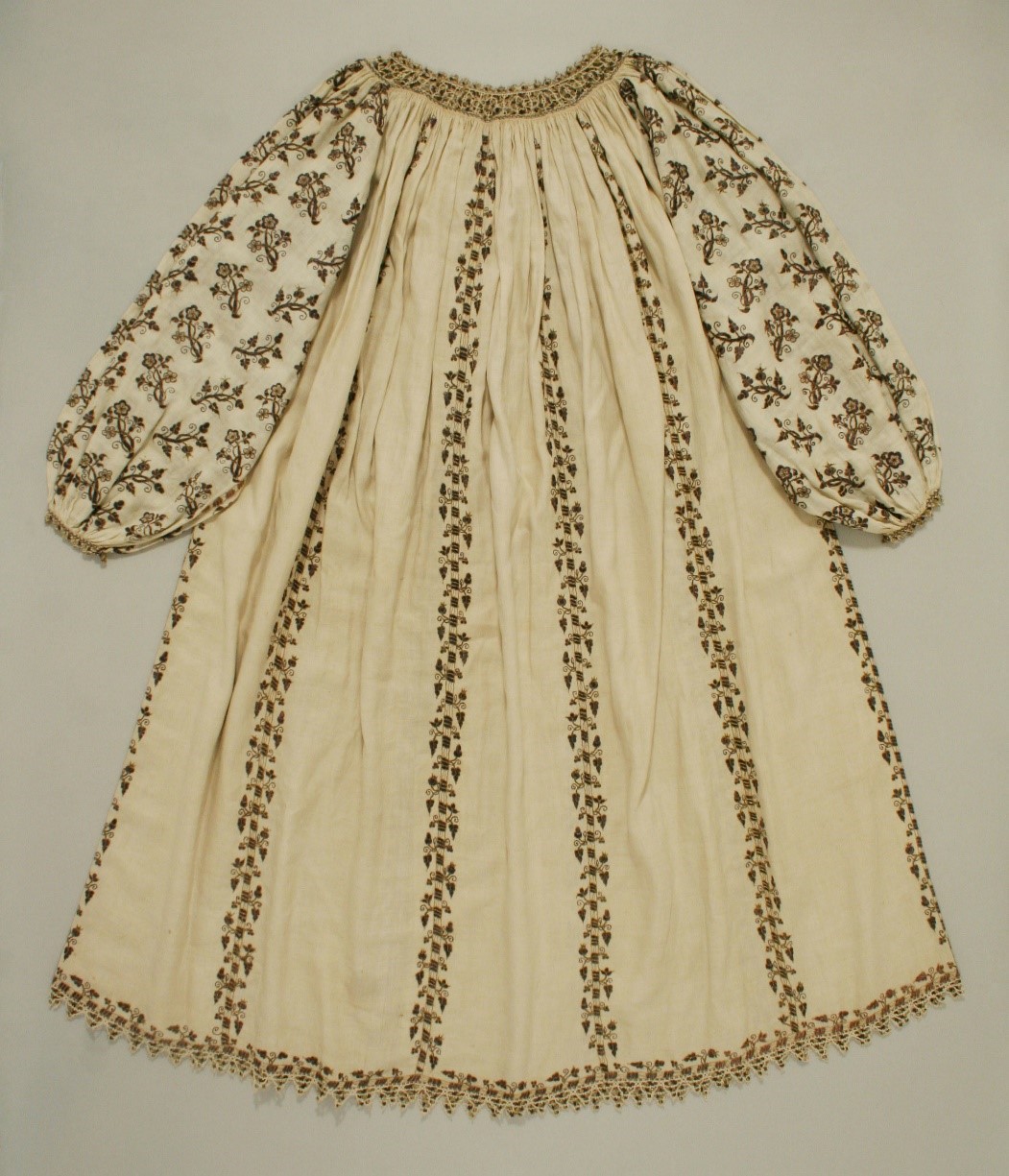
 Late 16th Century chemise at the Metropolitian Museum of Art in NYC[iv]
Figure 2 is one example of a late 16th Century Italian styled chemise.  The sleeves are heavily embroidered in purple silk and the body of the chemise is made up of thin panels that are then sewn together and the seams are embroidered over.   Because of the time it would take to make such a piece and the cost of the materials, this most likely belonged to an aristocrat.

Figure 3 Detail of a chemise with lace insertion, showing the upper part of the sleeve[v]

Figure 3 shows the underarm and the sleevehead to a late 16th Century style chemise.  Various laces are inserted between panels as well as around the neckline.  This is similar to what I attempted to do with the chemise on display.  The location of this extant chemise is currently unknown.


Figure 4 16th Century chemise close up showing needlework lace[vi]

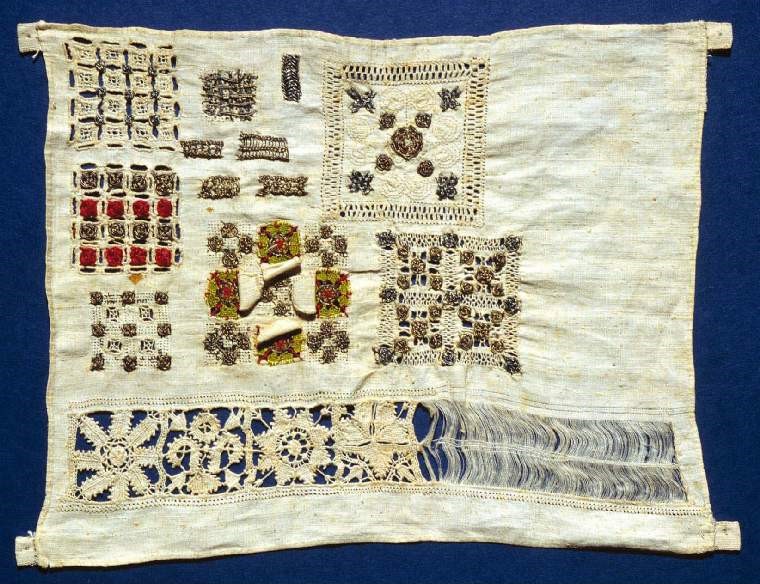
Figure 4 is not a true lace as we would know it today but a very specific type of embroidery called drawnwork.   The embroiderer would cut out some of the threads from the base fabric and wrap the remaining threads to create designs.  Figure 5 shows and example of needle work where it is half finished. 
Figure 5 Sampler from the late 16th C/ Early 17th C showing various types of embroidery[vii]

The mix of blue silk hippocampus and white bobbin lace I chose for the chemise comes from a few different embroidery examples.
Figure 6 Strip of blue embroidery with drawnwork, 16th C Italy[viii]
Figure 6 is from the Metropolitan Museum of Art in New York City.  It shows a mix of light blue embroidered flowers with cutwork or drawnwork. 
Figure 7 16th C textile showing lace insertion and dark blue silk embroidery

Figure 7 is closer to the techniques I used and shows both lace insertion and dark blue embroidery.  The base is linen with the blue thread embroidery being silk.  It is unknown what the textile itself was used for but most likely a table or alter cloth.
Figure 8 Seahorse or hippocampus, most likely done by Mary Queen of Scots
The hippocampus, or a mythical type of seahorse, was a popular motif throughout Europe in the late 16th C.  Not only does is show up in various drawings of the time, but, in Figure 8, there is an extant embroidery of one.  The embroidery is attributed to either Mary Queen of Scots or Elizabeth Talbot, Countess of Shrewsbury.[ix]

Technical Details

The main base of the chemise is linen.  The embroidered bands in the sleeves are older – I did them almost a decade ago- which is why the color of the linen is slightly different.  The bobbin lace is out of cotton.  Both linen thread and silk thread were used to sew everything together.

Italian Chemise Pattern

Placement Guide

The above patterns aren't the best but it is pretty much what I used.  (Ignore the orange pattern, it really is rectangular and not with a small bit cut out).  The green is what I used for casing along the gathered neckline. 

The Art Show where the finished chemise was first on exhibit

Close up of the full exhibit


Another close up of the embroidery


[i] http://costumedabbler.ca/cotton
[ii] https://www.luigi-bevilacqua.com/en/silk-and-venetian-fabrics-renaissance/
[iii] https://owlcation.com/humanities/History-of-Lace-Making
[iv] https://www.metmuseum.org/art/collection/search/83860?&searchField=All&sortBy=Relevance&when=A.D.+1400-1600&what=Costume%7cLinen&ft=linen+embroidery+italian&offset=20&rpp=20&pos=29
[v] http://realmofvenus.renaissanceitaly.net/workbox/extcam6.htm
[vi] http://realmofvenus.renaissanceitaly.net/workbox/extcam5.htm
[vii] https://webapps.fitzmuseum.cam.ac.uk/explorer/index.php?qu=Name:sampler&oid=110905
[viii] https://www.metmuseum.org/art/collection/search/215421
[ix] http://collections.vam.ac.uk/item/O138524/the-oxburgh-hangings-panel-mary-queen-of/

Sunday, August 26, 2018

Städel Museum in Frankfurt Part Two

They had two of my favorite Italian paintings from the 16th Century in the same room.  The second I saw that, I may of squealed aloud. 

See the lady in the green dress to the left and the lady in the red dress in the middle with the Cavalier King Charles Pup?  I gasped the second I saw they were right next to each other.

But first....The Holy Family by Garofalo painted between 1515 and 1520.

I love this for many reasons.  First, Saint Joseph, half asleep is wearing a pink garment with a red cloak.  There is no way to deny that that is anything other than bright pink.  Second, Mary's underdress looks lovely.  But third...that firebox.

Here is a close up of the firebox.  It looks almost exactly like the little pull wagon for alphabet blocks, but, clearly, not made of wood.  I think I need one for camping.  

Next, the Lady in Red by Agnolo Bronzino painted in 1533.  

The full painting.  I have seen this SO MANY TIMES in books and on the internet.  However, I never realized her sleeves are a rather nice green and not black.  Seriously they are a lovely green satin when you look at the painting in person.  And lets look at her Balzo more closely.

I thought she just had braids but it's pretty clearly a balzo instead.  Mostly, it looks like a hairnet with a metal headband.  It looks like the hairnet is two-toned as well.

The white work on the camica is only around the neck.  Also, there is a lovely band of trim around the neckline of the dress.

Close up of the sleeve.  Really, it's more green in person.  It's rather shocking how bad the photos come out of the sleeve.

Close up to see the pleats of the upper sleeve.

Another close up to show the lining of the lower sleeve.

Close up to show the trim a bit better and the scarf belt.

Another close up of the whitework.

The next painting if the Portrait of a Lady by Pieter De Kempeneer painted between 1527 and 1537.  Really, I think it's closer to the 1527 date.  

The full painting.  This is another I've stared at for hours in books and on the internet.  In fact, a decade ago, it was partially the inspiration for my Mom's Renaissance gown.   

First, the balzo.  That is just fabulous.  The jeweled headband with the white silk net around the tied up hair.   I really need to try this.  

The jewelry.  Oh my.  Those earrings!  That pearl necklace with the cameo!  And take a look at the sheer partlet!!!!

Now, the whitework on the camica and the crazy amount of gold trim.  What I found interesting is that the placement of the trim looks like it was "erased" and then put back.  This becomes very apparent on the sleeves in the next picture.

Whitework on the cuffs and the trim placement thing.  You can see where it looks like someone tried to get rid of the gold lines and put them back differently.

A close up of the waistline and the cuffs.  

Close up of the upper sleeve.

Here, I wanted to show the foldy-down waistline of the skirt you see sometimes in Italian dress.  I have no idea why that's there or why they did that but I have seen it in other portraits.


Next, Titian's Portrait of a Young Man from 1510.

This painting is pretty small and there isn't a good way to get close up's of the details.  Still, a rather nice blue doublet and a bright red hat.  

Carpaccio's Virgin and Child with the Infact Saint John from around 1500.

I found this interesting because they are all wearing shades of brown.  

Close up of Mary's sleeves and dress.

Close up of Saint John's cap and tunic.

Here, the museum started to get back into the earlier Medieval items.  This piece from Siena is known as the arrival and reception of Helen of Troy and dates to 1430.

I was amused by the pink houses, I admit.

Next, by Hugo Van Der Goes, a triptych with the Virgin and Child from the last quarter of the 15th C.

First, the triptych overall with the center piece removed.

The Virgin and Child were in the same case, just not in the centerpiece.  

What I liked was the donor's outfit.  It's pretty typical for the late 15th C but notice the black partlet going under the gown.  

The Portrait of Gilberecht von Holzhausen from 1535 really just looks neat.

I now want a crazy coat like that.  Look at that cape top!  That trim!  This is a way to take boring colors and make the garment look fabulous.

Lastly, there is Conrad Faber Von Creuznach's Portrait of Margarete Stralenberger from 1526.

This is her portrait overall.  It's pretty typical for a German portrait.  Still, look at her headgear and her embroidered collar!

Close up of the embroidery.  It's hard to tell but it looks like she might have a gown under the overgown.

Close up of the headgear.  Check out the blackwork!

Close up of the waistline.  I wanted to show the velvet front with the wool (?) overdress.


That's it for this part.  Part three should go up in a couple of days with a lot more paintings.  I'm trying to keep it to about 40 images to a post.  We'll see how well that works.